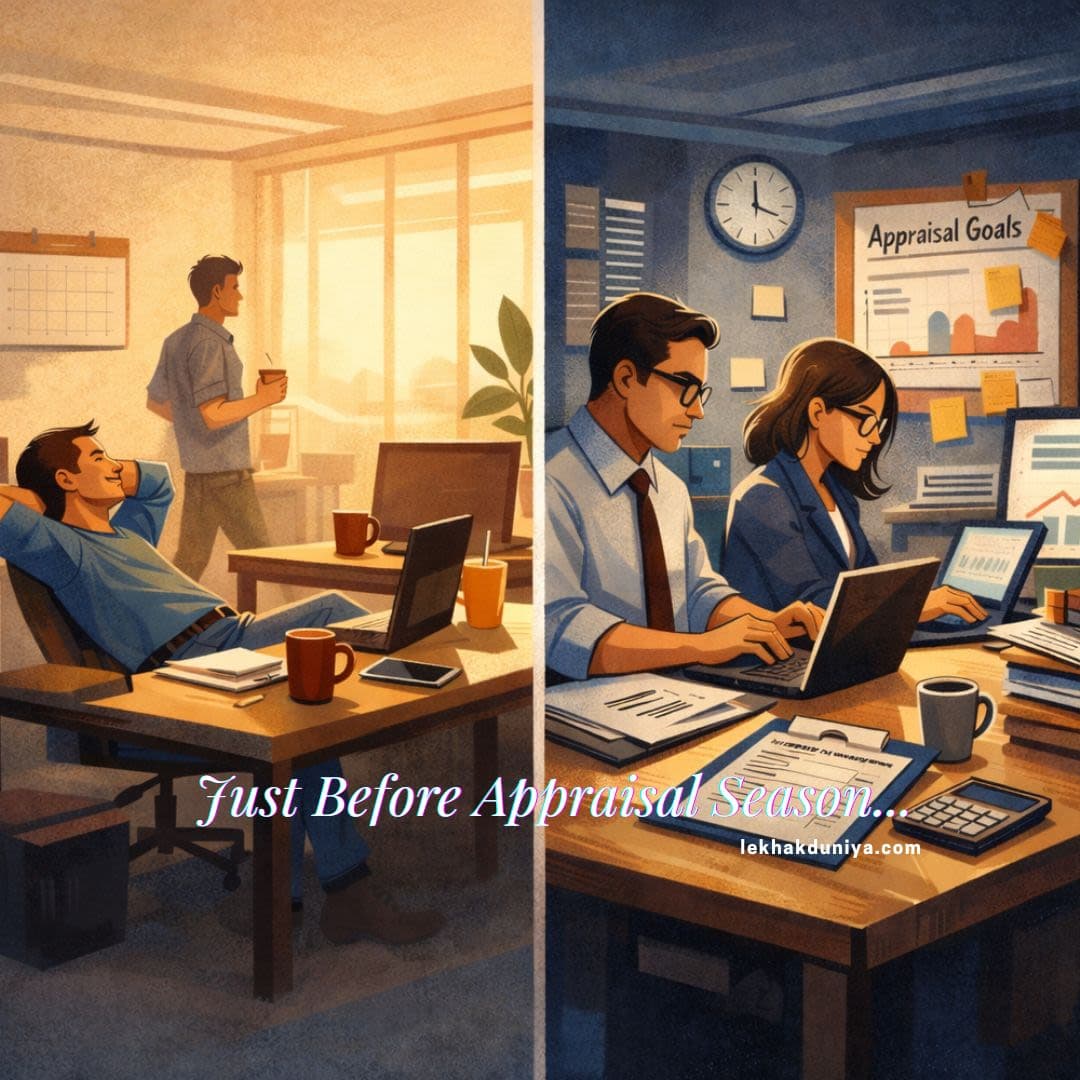
Every office has a season that no calendar mentions—but everyone recognises. A few weeks before annual appraisals, offices begin to feel different.
There’s no official announcement and no calendar reminder—but the shift is unmistakable. Employees become more alert, meetings feel more serious, and suddenly everyone seems busy. This period, often called appraisal season, quietly transforms workplace behaviour.
The Invisible Shift in Office Culture
Before annual appraisals, employees don’t necessarily work harder—they work more visibly.
Daily updates become detailed.
Emails sound more formal.
Cameras turn on in meetings that were audio-only all year.
It’s not about pretending. It’s about ensuring effort doesn’t go unnoticed in a system that values documentation as much as delivery.
Productivity or Performance Display?
This phase often turns into what many call productivity theatre.
Late-night emails appear more frequently.
Meetings are scheduled to “discuss alignment.”
Small tasks are framed as key contributions.
Work was happening all year.
Now, it’s being narrated.
The Annual Documentation Rush
One of the most common pre-appraisal habits is last-minute documentation.
Employees search through:
· Old emails
· Chat conversations
· Task trackers
· Past presentations
Every achievement is rewritten with impact-focused language. Routine responsibilities suddenly sound strategic—and rightly so. Appraisals reward not just effort, but clearly communicated outcomes.
Managers Under Pressure Too
Annual appraisals aren’t easy for managers either.
They must balance:
· Employee expectations
· Limited budgets
· Company performance
· Fairness across the team
Career discussions become more frequent. Feedback becomes more measured. Every conversation carries weight because appraisals influence morale long after numbers are shared.
Office Politics Becomes Subtle—but Stronger
Before appraisals, workplace dynamics change.
People become more cooperative, more careful, and sometimes more competitive. Credit-sharing conversations grow sensitive. Visibility matters more than ever, especially in large teams.
This isn’t negativity—it’s a natural response to evaluation systems.
The Emotional Side of Appraisal Season
Behind polished self-reviews lies anxiety.
Employees question their value.
They compare ratings.
They overanalyse feedback.
A single sentence from a manager can affect confidence for months. The waiting period after appraisal discussions often feels more stressful than the entire year of work.
The Reality of Annual Appraisals
Here’s the truth:
Annual appraisals do not measure effort alone.
They measure impact, communication, perception, and timing.
Hard work matters—but so does how well your work is understood.
Final Thought
Appraisal season doesn’t change people.
It reveals what organisations reward.
And once it ends, offices slowly return to normal—until the same quiet transformation begins again next year.
Because annual appraisals are not just about performance.
They’re about being seen.