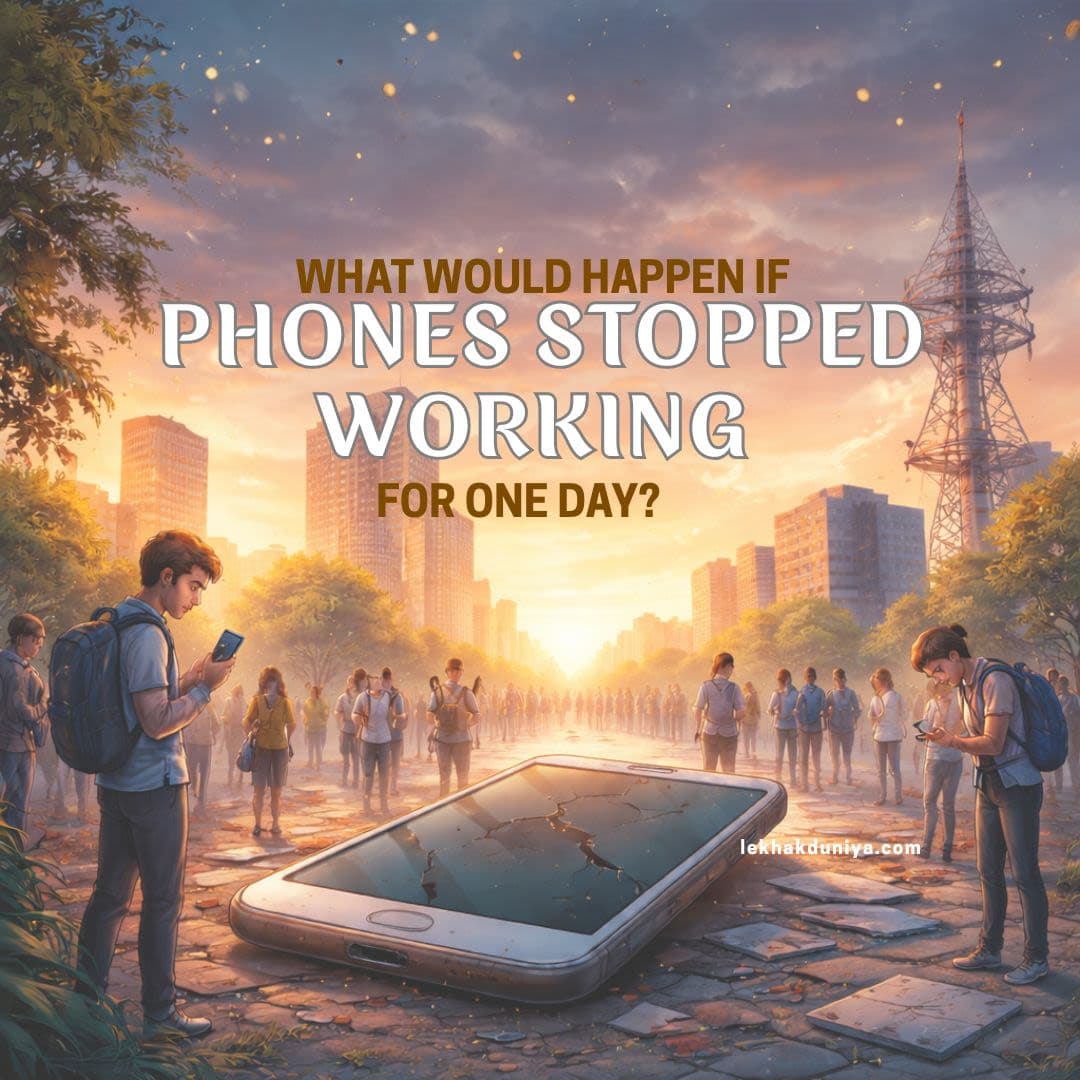
Imagine waking up to a tranquil morning. Your phone screen stays dark. No alarms. No notifications. No internet. At first, you think it’s a battery issue—until you realize every phone everywhere has stopped working.
Just for one day.
What would actually happen to the world, our routines, our emotions, and our relationships if smartphones suddenly went silent for 24 hours?
The First Hour: Confusion, Panic, and Disbelief
Phones are no longer just communication tools—they are alarm clocks, wallets, navigation systems, and social lifelines.
Within the first hour:
· People miss alarms and wake up late
· Offices struggle to contact employees
· Ride-hailing apps and online payments fail
· Emergency calls face massive disruption
The biggest shock wouldn’t be technical—it would be psychological. Many people would experience anxiety, restlessness, and a strong urge to “check” a screen that no longer responds.
Workplaces Without Phones: Chaos or Clarity?
Modern offices depend heavily on phones for:
· Emails and instant messages
· Two-factor authentication
· Remote work coordination
Meetings would be delayed. Approvals would stall. Productivity might drop sharply in the morning.
But by afternoon, something unexpected could happen.
Teams would talk more in person, problems would be solved faster without endless message threads, and meetings might actually become shorter and more focused.
For one day, human interaction would replace digital dependence.
Life on the Streets: A Slower World
Without GPS and mobile data:
· People would ask strangers for directions
· Traffic congestion could increase initially
· Local shops might see more foot traffic
Conversations would become more common. Eye contact would return. The city would feel slower—but strangely more alive.
This phone-free day would expose how rarely we truly notice our surroundings.
Social Media Silence: Emotional Withdrawal or Relief?
No likes. No stories. No scrolling.
At first, many would feel disconnected or “left out.” But as hours pass:
· Comparison anxiety would drop
· Mental clutter would reduce
· Attention spans would improve
People might rediscover hobbies, books, and unfinished conversations.
The absence of constant digital validation could feel uncomfortable—but also freeing.
Families and Relationships: A Rare Reconnection
With phones out of reach:
· Families would eat together without distractions
· Parents would listen more
· Children would play instead of scrolling
Couples would talk. Friends would meet face-to-face.
The day would remind us that relationships existed long before smartphones—and thrived.
Emergency Systems: A Serious Reality Check
Not everything would be positive.
· Emergency services relying on mobile networks would struggle
· Hospitals would shift to backup communication systems
· Governments would issue public announcements through radio and television
This one-day blackout would expose a critical truth:
Our world is dangerously overdependent on a single technology.
The Emotional Journey of a Phone-Free Day
Most people would go through stages:
1. Denial – “It’ll be back in a minute.”
2. Anxiety – “What if I miss something important?”
3. Adjustment – “I’ll manage somehow.”
4. Acceptance – “This isn’t so bad.”
5. Reflection – “How much of my life have I handed over to this device?”
By nightfall, many would feel calmer, more present, and mentally lighter.
What This One Day Would Teach Humanity
If phones stopped working for just one day, we would learn that:
· Convenience is not the same as necessity
· Human connection doesn’t require Wi-Fi
· Silence can be powerful
· Technology should serve life—not replace it
The day wouldn’t destroy the world.
It would expose our habits, addictions, and forgotten strengths.
Final Thought: Would We Want Our Phones Back?
Yes—phones are powerful tools. They save lives, connect nations, and drive progress.
But after one silent day, we might turn them back on with new boundaries, more awareness, and deeper respect for real life.
Sometimes, it takes silence to remind us what truly matters.